
Getting ready for work is something many of us do every day.
It might seem simple: wake up, get dressed, and leave the house.
But getting to work on time and feeling ready for the day takes planning, routine, and confidence.
We all prepare for work in our own way, but for people living with intellectual disability, getting ready for the day may look different from what most people expect.
Having a different routine does not mean someone is less able to work; it just means the support and steps involved are changed to suit the person’s needs and preferences.
Most of us follow simple habits to help us arrive on time and feel ready to start our workday:
For people living with intellectual disability, getting ready for work may include extra supports.
This is not about their ability to work, but about having the right tools and support in place to work at their best.
A great support worker will make sure the routines and supports around the person living with intellectual disability help them feel safe, confident, and able to live their life with purpose.
People living with intellectual disability may need:
Nick is a person living with intellectual disability who has recently celebrated 40 years of working at Bedford.
Following a morning routine helps him feel ready for the day:
These simple steps help Nick feel calm, organised, and confident.
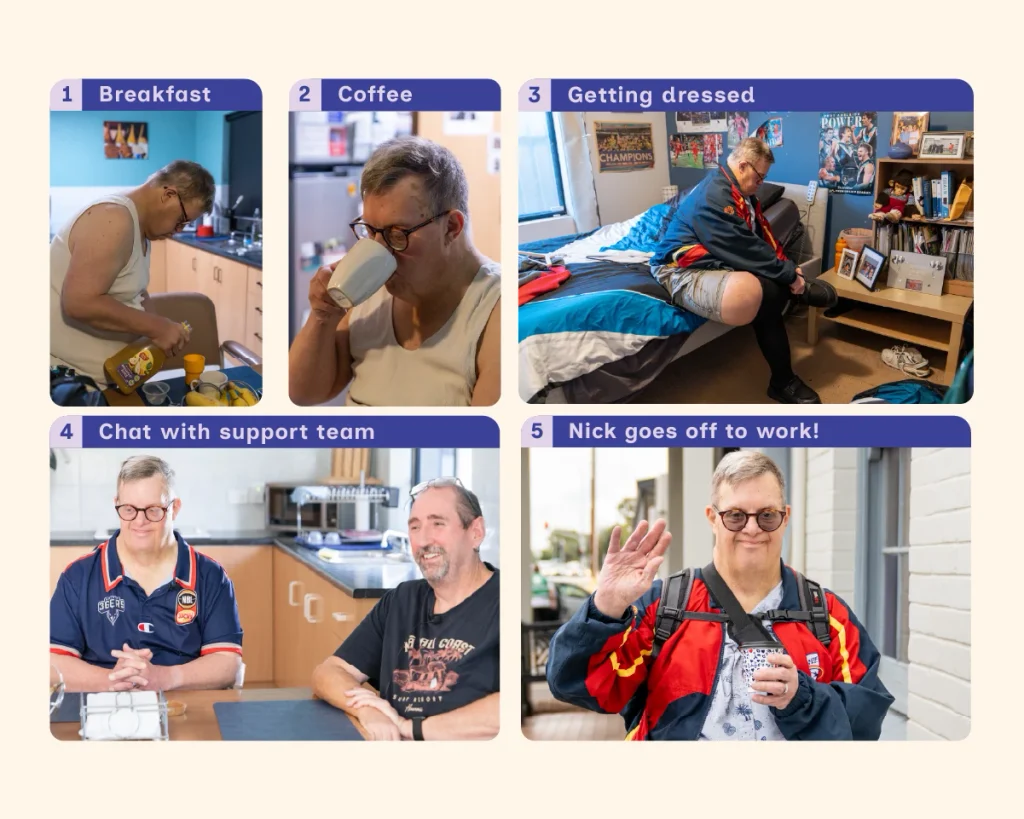
The right support begins with truly knowing the person—their goals, preferences, strengths, and support needs.
When we understand how someone gets ready for work, we can support them better.
Good support means:
When workplaces and support teams understand and cater to the needs and preferences of people living with intellectual disability, we help create a more inclusive, respectful community where everyone can do their best work.
Getting ready for work is part of everyday life.
With the right support, people living with intellectual disability can build morning routines that work for them.
The goal is simple: every person starts their workday feeling confident, supported, and ready.
HomePlace has been supporting people living with intellectual disability across Adelaide since 1989.
We are purposefully small because it allows us to truly know each person we support.
Our approach is personal, respectful, and tailored–always guided by the belief that everyone deserves to live a big, rich life filled with purpose, joy, connection, and community.
This is The HomePlace Way.
For people living with disability, their families, and their supporters.
The Australian Government wants to change how the NDIS works.
They say the NDIS needs stronger rules so funding is used fairly and plans can continue to work well in the future.
This means that some rules, supports, and processes will change over the next few years.
| 2026 | 2027 | 2028 |
|---|---|---|
| May–June: New laws introduced. | April: New NDIS ‘framework’ plans roll out. | Eligibility rules change. |
| July: Provider registration expands and new payment systems begin. | Later in the year: More provider registration requirements. | Functional capacity assessments in place. |
| October: Social & Community Participation funding changes start. | Support Coordination moves to a panel model. |
✅ Understand your support needs.
Think about what support you need to get through each day.
✅ Plan to use your funding.
Do not leave money unused.
✅ Talk to people you trust.
This includes your support coordinator, quality providers, family, or advocates.
✅ Ask questions.
It is okay to ask for help to understand these changes.
Based on Minister Mark Butler’s National Press Club announcement and government information (22 April 2026).
If you search for NDIS providers online, you’ll notice many say the same things:
So how do you know who will truly support you to live well?
The difference isn’t in the words providers use—it’s in what they do, day in and day out.
At HomePlace, we believe great support is about more than meeting requirements.
It’s about truly knowing each person, building trusted relationships, and supporting people to live lives filled with purpose, connection, and choice.
All registered providers must meet NDIS standards, but the best providers go further.
Here are 5 ways to recognise a provider who genuinely provides great support:
1. They take the time to truly know you
Great support starts with listening.
A quality provider takes the time to understand who you are—your goals, routines, interests, strengths, and what matters most to you.
Support should be shaped around you, not the other way around.
As your life changes, your support should change with you.



I like my staff team and how they respect my routine—but also my need for ‘me’ time.
When providers truly know you, they can support your independence, confidence, and sense of belonging in ways that feel right for you.
2. Their leaders are visible and approachable
Trust grows when you know your voice will be heard.
Strong providers make their leaders accessible—not hidden behind paperwork or email addresses.
If something doesn’t feel right, you should know who to talk to and feel confident you’ll be listened to.

I like that I can phone or meet with the bosses—Julie or Glenn—if I’m worried about something or have a question.
Good leadership creates safe, consistent support through clear communication, well-trained teams, and decisions that are explained openly and respectfully.
3. They focus on doing a few things well
Quality support isn’t about doing everything—it’s about doing the right things well.
The best providers are honest about what they provide and take care to match the people that they support with staff who are the right fit.
They stay with you through every challenge and keep working until something feels right.

I wanted to move to a better place. HomePlace kept looking for a better house for me. I like how they worked with my sister to find this house. I like where and how I live now…I feel free.
Consistency, honesty, and care are at the heart of quality support.
4. They support real connection and belonging
A good life is about more than being supported at home.
Great providers support people to take their rightful place in the community—through work, volunteering, learning, friendships, sport, the arts, and shared experiences.
They help you to meet new people with similar interests and recognise that everyone has the right to belong, everywhere, every day.
Connection builds confidence, purpose, and joy.
5. They are open, clear, and respectful
You should always understand your support and feel safe to speak up.
Strong providers:
Trust grows when nothing is hidden and communication is honest and clear.
Choosing the right provider
Choosing an NDIS provider isn’t just about systems or standards.
It’s about finding a partner who sees you as a whole person—with strengths, dreams, and something valuable to contribute.
The right provider will work with you, supporting you to live a life that feels meaningful, connected, and truly yours.
About HomePlace
HomePlace has been supporting people living with intellectual disability across Adelaide since 1989.
We are purposefully small because it allows us to truly know each person we support.
Our approach is personal, respectful, and tailored—always guided by the belief that everyone deserves to live a big, rich life filled with purpose, joy, connection, and opportunity.
This is The HomePlace Way.