


Getting ready for work is something many of us do every day.
It might seem simple: wake up, get dressed, and leave the house.
But getting to work on time and feeling ready for the day takes planning, routine, and confidence.
We all prepare for work in our own way, but for people living with intellectual disability, getting ready for the day may look different from what most people expect.
Having a different routine does not mean someone is less able to work; it just means the support and steps involved are changed to suit the person’s needs and preferences.
How people usually get ready for work
Most of us follow simple habits to help us arrive on time and feel ready to start our workday:
- Getting organised the night before
Packing a bag, checking shifts, making lunch, or choosing clothes before we go to sleep can make our mornings easier. - Following a morning routine
Setting an alarm for and eating breakfast at the same time every day makes it easier for many of us to get to work on time. It is also important to give ourselves extra time to travel in case the roads are busy. - Planning the trip to work
Knowing how to get to work safely, whether by car, bus, bike, or walking, and how long the trip usually takes helps us to arrive on time. - Feeling ready for the day
Some of us drink coffee, listen to music, or take a quiet moment to relax before work.
What might be different for people living with intellectual disability?
For people living with intellectual disability, getting ready for work may include extra supports.
This is not about their ability to work, but about having the right tools and support in place to work at their best.
A great support worker will make sure the routines and supports around the person living with intellectual disability help them feel safe, confident, and able to live their life with purpose.
People living with intellectual disability may need:
- Clear routines
Step-by-step instructions, picture lists, or reminders from an alarm or support person can help make their mornings easier and more predictable. - Extra time
Allowing more time in the morning can reduce stress and help them feel calm. - Support with travel
Learning how to use public transport and travelling to work with a support worker during their first few bus, train, or tram rides can build their confidence to get there by themselves over time. - Support with feeling ready
Reading a social story or having a quick chat about the day ahead with a support person can help someone feel ready and confident to work.
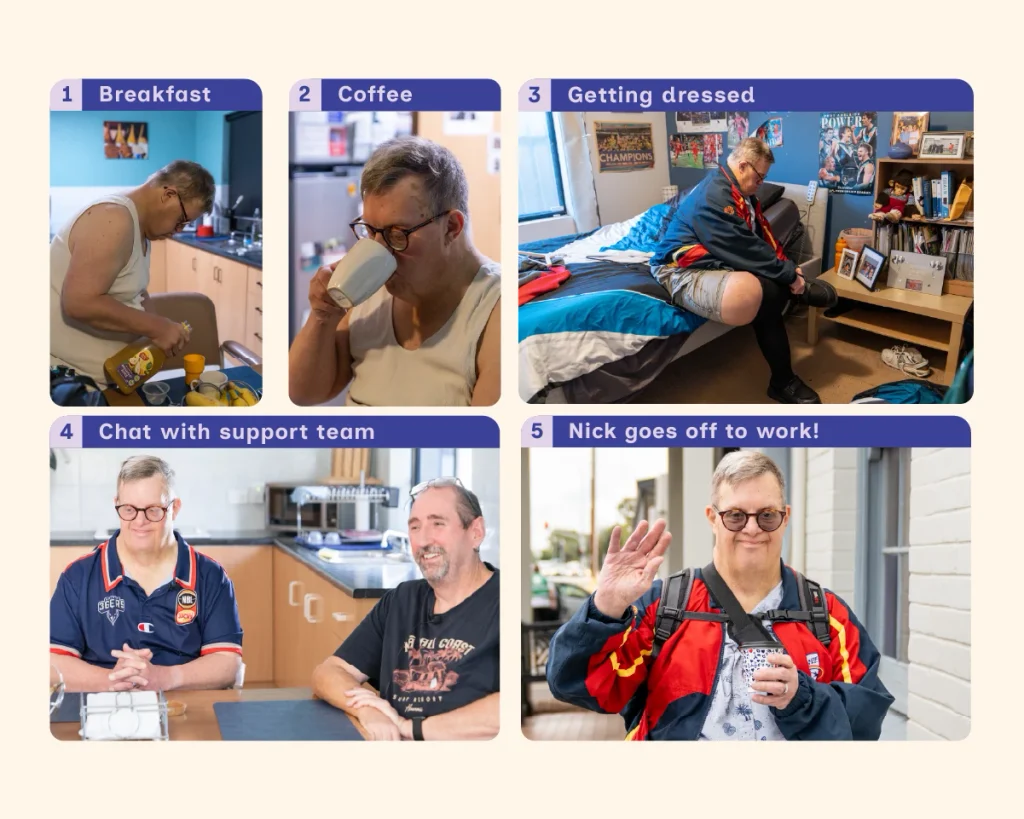
Nick’s morning routine
Nick is a person living with intellectual disability who has recently celebrated 40 years of working at Bedford.
Following a morning routine helps him feel ready for the day:
- Nick wakes up at 5:30 AM and starts his workday with breakfast.
- He has a coffee and takes a moment to wake up.
- Nick gets dressed for work, a step made easier by choosing his clothes the night before.
- Before he leaves home, Nick has a quick chat with his support worker Wally. This helps him know what to expect for the day.
- Nick leaves for work and arrives ready to start.
These simple steps help Nick feel calm, organised, and confident.
Why the right support matters
The right support begins with truly knowing the person—their goals, preferences, strengths, and support needs.
When we understand how someone gets ready for work, we can support them better.
Good support means:
- Supporting the person in a way that works for them.
- Encouraging independence whenever possible.
- Reducing stress and helping them feel safe.
- Building their confidence, life roles, and connection to their community.
When workplaces and support teams understand and cater to the needs and preferences of people living with intellectual disability, we help create a more inclusive, respectful community where everyone can do their best work.
Building independence
Getting ready for work is part of everyday life.
With the right support, people living with intellectual disability can build morning routines that work for them.
The goal is simple: every person starts their workday feeling confident, supported, and ready.
About HomePlace
HomePlace has been supporting people living with intellectual disability across Adelaide since 1989.
We are purposefully small because it allows us to truly know each person we support.
Our approach is personal, respectful, and tailored–always guided by the belief that everyone deserves to live a big, rich life filled with purpose, joy, connection, and community.
This is The HomePlace Way.